The digital landscape is a constant hum of customer voices, and every review, every comment, every star rating shapes your brand's destiny. For modern businesses, managing this torrent of opinion isn't just about damage control; it's a strategic imperative. Enter AI for Review & Feedback Management, a game-changer that doesn't just process data but actually understands and acts on it, protecting and proactively enhancing your brand's reputation.
Forget the days of sifting through spreadsheets or manually crafting replies. AI isn't just a fancy buzzword; it's the intelligent engine transforming how businesses listen, learn, and lead with their customers. It turns a potential problem into your greatest asset for growth and trust.
At a Glance: What AI for Review & Feedback Management Delivers
- Real-time Aggregation: Gathers feedback from every corner of the internet – review sites, social media, surveys – into one centralized hub.
- Sentiment Analysis: Uses natural language processing (NLP) to understand the mood and meaning behind customer comments, not just keywords.
- Issue Identification: Automatically flags emerging problems, product pain points, or service gaps before they escalate.
- Automated Responses: Generates personalized replies and routes critical cases to the right human teams, ensuring swift and consistent communication.
- Brand Health Monitoring: Provides a unified dashboard to track ratings, response times, and overall brand sentiment, offering actionable insights.
- Efficiency & Scale: Handles vast volumes of feedback with speed and accuracy impossible for human teams alone.
- Proactive Reputation Management: Helps you identify and address negative trends early, while amplifying positive feedback.
The Feedback Avalanche: Why Traditional Methods Are Falling Short
Think about the sheer volume of places customers can share their opinions today: Google Reviews, Yelp, Amazon, Facebook, Twitter, Instagram, product-specific forums, internal surveys, and countless industry-specific platforms. Each one is a megaphone, amplifying praise or criticism for the world to see. For many businesses, grappling with this feedback has become an overwhelming challenge.
Manual review monitoring is like trying to catch raindrops in a sieve during a storm. You’ll inevitably miss critical feedback, fail to respond promptly, or, worse, misunderstand the underlying sentiment. This isn't just a time sink; it’s a direct threat to your brand. Unaddressed negative reviews can deter potential customers, while slow responses make even satisfied customers feel unheard.
Traditional methods often provide a fragmented view. You might see a high star rating on one site, but miss a recurring complaint about shipping delays on another. Without a unified perspective, you're making decisions based on incomplete information, leaving your brand vulnerable and opportunities for improvement undiscovered. This is precisely where AI steps in, offering a strategic advantage that goes beyond mere management to actual reputation enhancement.
How AI Transforms Review & Feedback Management
AI's magic lies in its ability to process, understand, and act on vast quantities of unstructured data at speeds no human team can match. It moves you from reacting to being proactive, transforming raw feedback into actionable intelligence.
Beyond Simple Aggregation: The Power of Unified Data
The first, crucial step in effective feedback management is bringing all customer voices together. AI-powered review management software does this automatically, pulling in data from every major review site, social media platform, customer survey, and even internal communication channels. It's not just collecting links; it's centralizing the actual content, ratings, and associated metadata.
Imagine having a single, comprehensive dashboard that shows you everything customers are saying about your brand, in real-time. This unified view eliminates blind spots, giving you a holistic understanding of your brand's public perception. No more jumping between tabs or stitching together reports from disparate sources. This foundational aggregation enables all subsequent AI capabilities. Understanding effective customer feedback strategies starts with this consolidated view.
Understanding the Nuance: AI-Powered Sentiment Analysis
This is where AI truly shines. Natural Language Processing (NLP), a branch of AI, doesn't just scan for keywords; it understands the context, tone, and emotional content of text. A human might say "The product was okay, but the delivery was a nightmare." Traditional keyword analysis might just pick up "okay" and "nightmare" and average them out. NLP, however, dissects the sentence, recognizing "okay" as neutral for the product and "nightmare" as strongly negative for delivery.
AI can identify positive, negative, and neutral sentiment, and often more granular emotions like frustration, joy, or confusion. It can even detect sarcasm or irony, a notoriously difficult task for machines. This deep understanding allows businesses to pinpoint exactly what aspects of their product or service are delighting customers and what areas are causing friction. To delve deeper into this, explore the fundamentals of sentiment analysis.
Actionable Insights: Identifying Trends and Pain Points
Beyond individual review analysis, AI excels at pattern recognition across massive datasets. It can:
- Flag Emerging Issues: Notice a sudden spike in complaints about a specific feature, a new bug, or a shipping carrier's performance, even if individually, these reviews might seem minor.
- Identify Product/Service Pain Points: Automatically categorize feedback into themes – "battery life," "customer support responsiveness," "ease of use," "pricing" – revealing specific areas for improvement.
- Spot Competitive Gaps: By analyzing what customers praise in competitors and criticize in your offerings, AI can highlight opportunities to differentiate.
- Uncover Untapped Opportunities: Discover positive feedback about an unexpected use case for your product, suggesting new marketing angles or feature developments.
These insights aren't just statistics; they are direct directives for product development, service enhancements, and marketing campaigns, moving your business forward with data-driven confidence.
Responding with Speed and Precision: Automated Workflows
The quicker you respond to feedback, especially negative feedback, the better your chances of mitigating damage and even turning a negative experience into a positive one. AI automates and streamlines this critical process:
- Prioritization: AI can instantly identify high-impact reviews (e.g., highly negative, from an influential customer, or trending on social media) and flag them for immediate human attention.
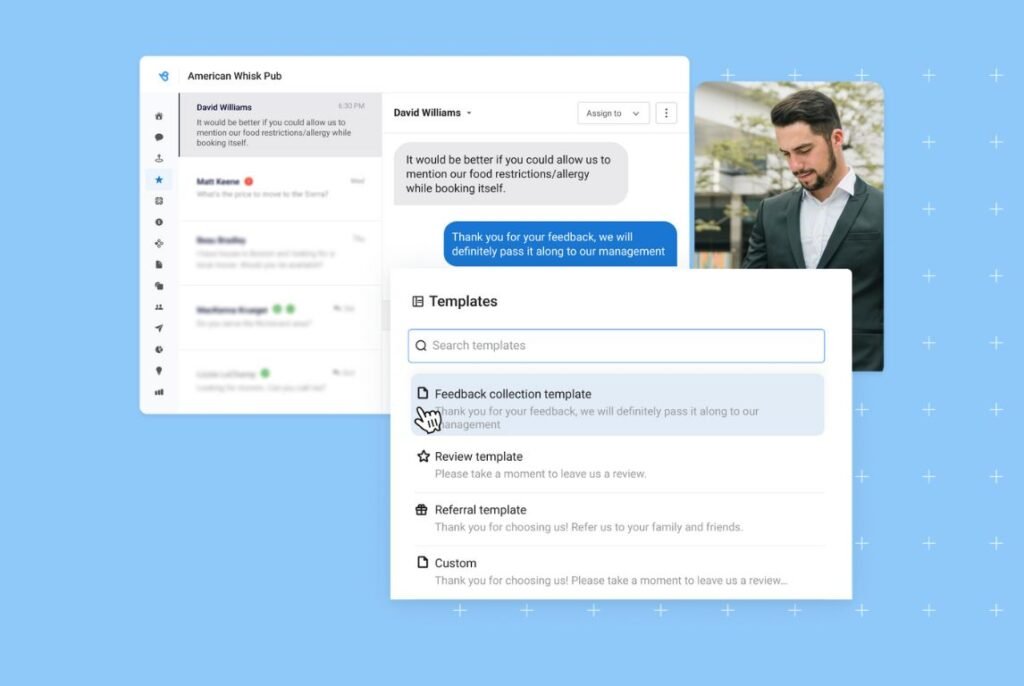
- Personalized Replies: Using pre-approved templates and dynamic content generation, AI can craft personalized responses that address specific points raised in a review. This ensures consistency in brand voice while maintaining relevance.
- Critical Case Routing: Negative feedback that requires human intervention (e.g., a customer threatening to churn, a serious product defect) is automatically routed to the appropriate support team or department, complete with all relevant context.
- Automated Escalation: If a review remains unaddressed or escalates, AI can trigger further alerts to ensure no critical feedback falls through the cracks.
This isn't about replacing human empathy, but empowering your team to focus on complex cases while AI handles the high volume of routine interactions efficiently. For guidance on crafting these responses, you can Access our response generator.
Key Benefits You Can Expect from AI-Powered Feedback Management
Implementing AI in your review and feedback strategy isn't just about making things easier; it's about fundamentally improving your business's health and trajectory.
Enhanced Brand Reputation & Trust
This is the ultimate prize. By consistently listening, understanding, and responding to your customers, you build a reputation as a responsive, customer-centric brand. AI helps you:
- Proactively address issues: Catch and resolve problems before they become widespread crises.
- Amplify positive voices: Identify and share glowing reviews, turning satisfied customers into brand advocates.
- Show you care: Even automated, personalized responses demonstrate that customer opinions are valued, fostering loyalty and trust.
- Improve online visibility: Active review management often leads to higher search engine rankings and more positive online real estate. Learn more about key metrics for brand reputation.
Operational Efficiency & Cost Savings
The sheer volume of manual work saved is staggering. Imagine the hours previously spent:
- Searching different platforms for new reviews.
- Reading every comment to gauge sentiment.
- Manually assigning tasks to customer service.
- Drafting repetitive responses.
AI automates these laborious tasks, freeing up your team to focus on higher-value activities like strategic planning, complex problem-solving, and truly personal customer interactions. This translates directly into reduced labor costs and a more efficient workforce.
Deeper Customer Understanding
Traditional feedback often focuses on what customers say. AI digs deeper to uncover why they're saying it. By identifying recurring themes, understanding sentiment, and correlating feedback with sales or product usage data, you gain a granular, data-backed understanding of:
- Customer needs and expectations: What truly matters to your target audience.
- Product strengths and weaknesses: Specific features or aspects that delight or frustrate.
- Service experience gaps: Where your customer support might be falling short.
- Market trends: Emerging desires or shifts in consumer behavior.
This profound insight powers smarter decisions across your entire organization.
Proactive Issue Resolution
No business is perfect, and problems will arise. The difference between a minor hiccup and a brand-damaging crisis often lies in how quickly and effectively you respond. AI provides:
- Early Warning Systems: Flags unusual spikes in negative sentiment or specific keywords, alerting you to potential problems as they emerge, not after they've festered.
- Root Cause Analysis: Helps identify the underlying reasons for recurring issues, enabling systemic fixes rather than just treating symptoms.
- Faster Response Times: Automated routing and suggested responses ensure critical feedback gets attention immediately, preventing issues from escalating on public forums.
By being proactive, you can often resolve customer dissatisfaction before it reaches a wider audience, protecting your reputation and potentially saving a valuable customer relationship.
Implementing AI for Feedback: A Practical Roadmap
Integrating AI into your review and feedback management isn't a flip of a switch, but a strategic implementation. Here's a practical roadmap to guide you.
Step 1: Define Your Goals & Data Sources
Before diving into tools, clarify what you want to achieve. Are you aiming to:
- Improve overall star ratings?
- Reduce customer service response times?
- Identify specific product development needs?
- Boost brand sentiment on social media?
Your goals will dictate which metrics to track and what features are most important in an AI solution. Simultaneously, map out all your current and desired feedback channels. This includes review sites (Google, Yelp, TripAdvisor, industry-specific ones), social media (Facebook, Twitter, Instagram comments), customer service interactions (chat logs, support tickets), and surveys. The more comprehensive your data sources, the richer your AI insights will be.
Step 2: Choosing the Right AI Tool
The market for AI-powered review management software is growing. When evaluating options, consider:
- Integration Capabilities: Can it seamlessly connect with all your relevant data sources and existing CRM/customer service platforms?
- NLP & Sentiment Accuracy: Does its AI accurately understand nuance in your industry's specific language? Ask for demos using your own sample data.
- Customization: Can you train the AI on your brand's specific vocabulary, product names, and desired response tones?
- Automation Workflows: How flexible and robust are its rules for routing, prioritization, and automated response generation? Can it handle complex scenarios?
- Reporting & Analytics: Does it offer clear, actionable dashboards and reporting that align with your defined goals?
- Scalability: Can it grow with your business and handle increasing volumes of feedback?
- Support & Training: What kind of support does the vendor offer during implementation and ongoing usage?
Choosing selecting the right AI tools is critical for long-term success.
Step 3: Integrating & Training (Yes, AI Needs Training Too)
Once you've selected a tool, the integration process begins. This involves connecting your various feedback channels to the AI platform. While much of the AI's core functionality is pre-built, you'll still need to "train" it to some extent for optimal performance:
- Define Keywords & Categories: While AI excels at discovery, providing it with your brand's specific product names, common issues, and desired categorization can significantly improve accuracy.
- Approve Response Templates: Work with your marketing and customer service teams to develop a library of on-brand response templates that the AI can draw from and personalize.
- Feedback Loops: Initially, monitor the AI's sentiment analysis and automated responses closely. Provide feedback to the system, correcting misclassifications or refining response suggestions. This continuous feedback loop helps the AI learn and improve over time.
Step 4: Monitoring & Iterating
AI is not a "set it and forget it" solution. Its effectiveness relies on ongoing monitoring and iteration:
- Regularly Review Dashboards: Track key metrics like sentiment scores, response times, issue trends, and changes in overall ratings.
- Analyze AI Performance: Periodically audit the AI's classification accuracy and the quality of its automated responses. Are customers satisfied with the AI's replies?
- Adjust Workflows: As your business evolves or new trends emerge, update your AI's rules for routing, prioritization, and response generation.
- Seek User Feedback: Gather input from your customer service and product teams on how the AI is impacting their work and what improvements they suggest.
This iterative approach ensures your AI solution remains agile, accurate, and aligned with your evolving business needs.
Common Myths & Misconceptions About AI in Feedback
Despite its growing adoption, several myths still swirl around AI in review and feedback management. Let's bust a few.
"AI Will Replace Human Interaction"
This is perhaps the biggest misconception. AI isn't here to replace your customer service team; it's here to empower them. It handles the mundane, repetitive tasks, freeing up human agents to focus on complex, sensitive, or high-value interactions that genuinely require empathy and nuanced problem-solving. Think of AI as your team's super-efficient assistant, not a replacement. In fact, by providing instant, initial responses, AI can often improve the overall customer experience by making customers feel heard immediately.
"It's Only for Huge Enterprises"
While large corporations certainly benefit from AI's ability to handle massive data volumes, the technology is increasingly accessible and affordable for small and medium-sized businesses (SMBs) too. Many solutions offer tiered pricing models, allowing businesses of all sizes to leverage AI's power to punch above their weight, compete more effectively, and provide exceptional customer experiences without needing an army of staff.
"It's a 'Set It and Forget It' Solution"
As discussed in the practical roadmap, AI requires initial setup, ongoing monitoring, and continuous refinement. While it automates many processes, it's not a magic bullet that works perfectly on its own forever. Like any powerful tool, its effectiveness depends on how well it's configured, maintained, and adapted to changing circumstances. Ignoring it after deployment is a surefire way to underutilize its potential.
Best Practices for Maximizing Your AI Investment
Getting the most out of your AI for review and feedback management means adopting a strategic mindset.
Balance Automation with Human Oversight
While AI can automate responses and flag issues, a human touch remains invaluable. Use AI to handle high-volume, routine queries and initial responses, but ensure critical or complex cases are escalated to human agents. Regularly review automated responses to ensure they align with your brand voice and are genuinely helpful. The goal is augmentation, not absolute replacement. Keep in mind best practices for automated responses.
Personalization is Key, Even with AI
Generic, robotic responses defeat the purpose. Leverage AI's ability to pull specific details from a review (e.g., product name, specific issue mentioned, customer's name) to craft responses that feel genuinely personalized. Even if the AI generates the core of the message, ensure it sounds human and addresses the customer's unique feedback directly.
Focus on Actionable Metrics, Not Just Volume
It's easy to get caught up in the sheer number of reviews or the overall star rating. While these are important, dig deeper. Use AI's sentiment analysis and theme identification to uncover why your ratings are changing. Focus on metrics that directly inform strategic decisions:
- What are the top 3 recurring pain points mentioned this month?
- Has sentiment around our new feature improved or declined?
- Which customer service agent gets the most positive mentions for resolution?
- What percentage of negative reviews are we able to turn around with a quick response?
Continual Learning & Adaptation
The digital landscape, customer expectations, and even your own product offerings are constantly evolving. Your AI solution should evolve with them. Continuously feed new data into the system, update your response templates, and refine your rules based on performance metrics and changing business needs. Treat your AI as a living system that requires ongoing care and attention to deliver maximum value.
The Future Is Now: What's Next for AI in Feedback Management?
The evolution of AI in review and feedback management is moving at an incredible pace. Expect to see:
- Predictive Analytics: AI moving beyond identifying current trends to predicting future issues or customer churn based on feedback patterns.
- Generative AI for Deeper Personalization: More sophisticated AI models that can generate even more context-aware, empathetic, and nuanced responses, blurring the line between human and machine-generated content.
- Cross-Channel Cohesion: Even more seamless integration across all customer touchpoints, creating a truly unified customer profile that AI can leverage for hyper-personalized interactions.
- Voice and Visual Feedback Analysis: AI expanding its capabilities to analyze spoken feedback from calls or visual cues in user-generated content, adding new dimensions to understanding customer sentiment.
- Proactive Engagement: AI identifying customers who might be about to leave a negative review and triggering proactive outreach from your team to address their concerns before they go public.
The promise is not just to manage feedback, but to truly anticipate and shape the customer journey, turning every interaction into an opportunity for loyalty and growth.
Your Next Steps: Taking Control of Your Brand's Narrative
The era of merely reacting to customer feedback is over. With AI for Review & Feedback Management, you have the power to transform customer voices from an overwhelming challenge into your most potent strategic advantage. By embracing these intelligent tools, you're not just safeguarding your brand; you're actively building a stronger, more trusted, and more customer-centric future.
Start by assessing your current feedback workflow. Where are your biggest pain points? Which areas could most benefit from automation and deeper insight? Then, begin exploring the AI solutions available, keeping your specific goals and budget in mind. The time to invest in your brand's digital reputation, powered by intelligent AI, is now.